Login-free recurring payments
I led the end-to-end design of TaxDome’s recurring invoicing experience – from payment-flow modelling and product architecture to usability testing, responsive UI and implementation review.
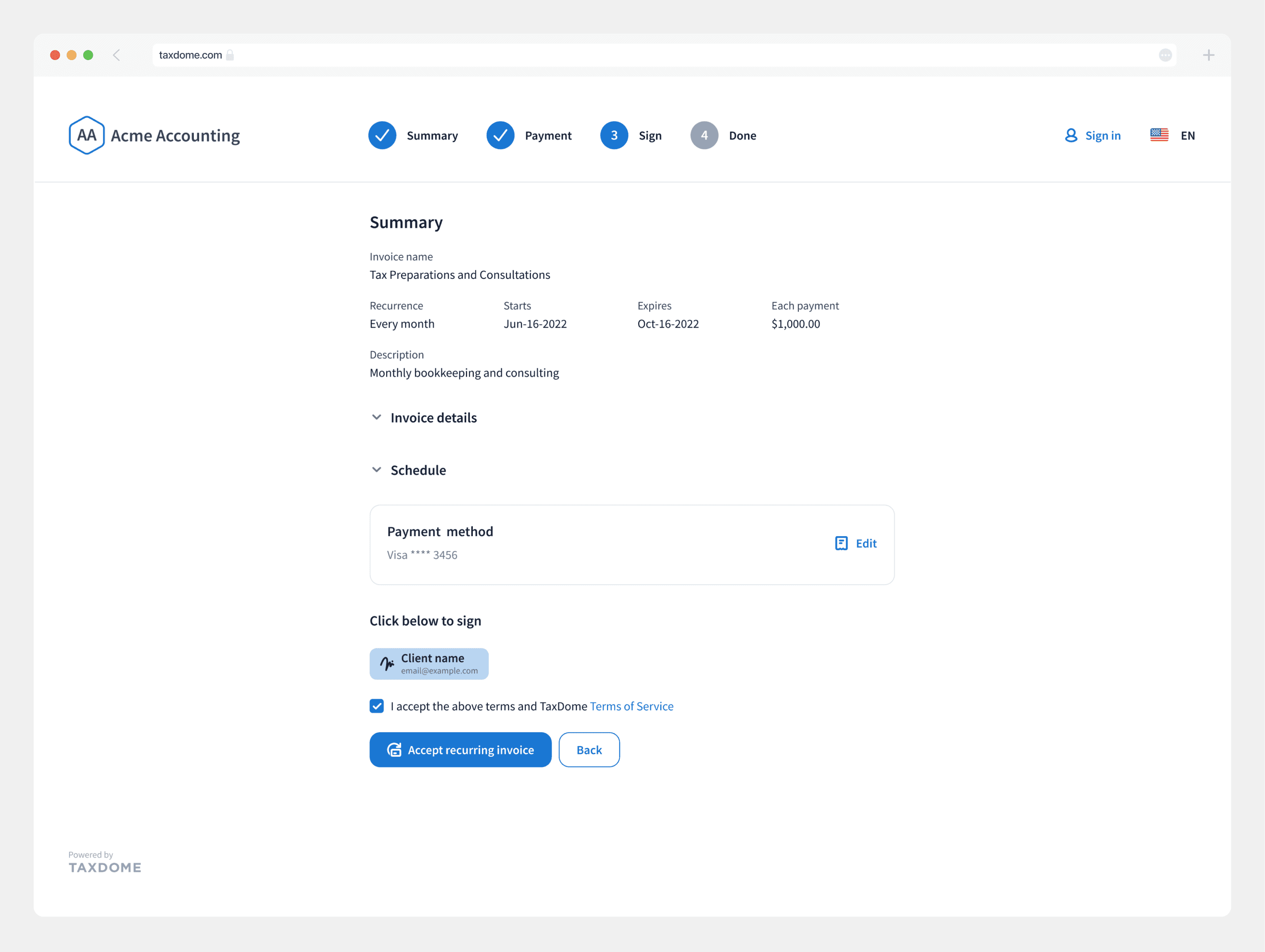
The defining decision was allowing clients to review, sign and accept recurring invoices without logging in. Despite significant implementation complexity, removing authentication from the critical path eliminated a major source of payment friction.
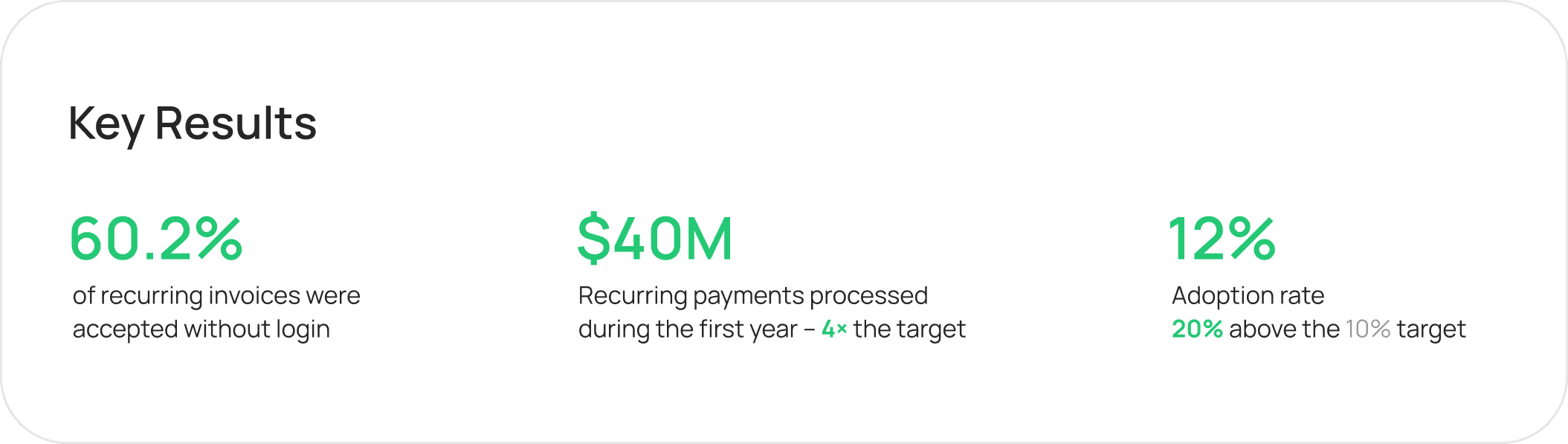
The feature processed $10M in its first month and nearly $40M during its first year – four times the original annual target.

Manual invoicing was only the visible problem.
TaxDome supported one-off invoices, but accounting firms also charge clients repeatedly for ongoing services. Without recurring billing, firms had to recreate invoices and follow up on payments manually, while clients lacked a clear way to understand and accept a recurring financial commitment. The Product Manager and I identified demand through previous usability studies, feedback forms, support requests and a poll in our early-adopter community. The response showed that this was not simply an administrative convenience: recurring billing could create predictable cash flow for firms while generating transaction revenue for TaxDome. I was responsible for translating that opportunity into a product that firms could use at scale and clients could complete without assistance. We had five months to research, design, validate and deliver the experience before tax season, with targets of 10% adoption and $10M processed during the first year.


I modelled the payment system before designing the interface.
Stripe would power the payments as a white-label solution, but it did not provide an embeddable firm-side interface that TaxDome could use. We therefore had to design the accounting-firm experience from scratch and create a customised client journey around Stripe’s underlying subscription rules. I worked directly with the Stripe team, studied its documentation and mapped the complete lifecycle before moving into detailed interface design. This included successful payments, failed-payment recovery, 3D Secure verification and the subscription states that needed to remain consistent across Stripe, TaxDome, the accounting firm and its client. A failure in one part of the system affected every other part. Firms needed accurate payment statuses, clients needed understandable recovery paths, and TaxDome needed to reflect Stripe’s state without exposing technical complexity. Modelling the system early allowed product, design and engineering to resolve edge cases before they became expensive implementation problems.
I removed login from the critical path without hiding the financial commitment.
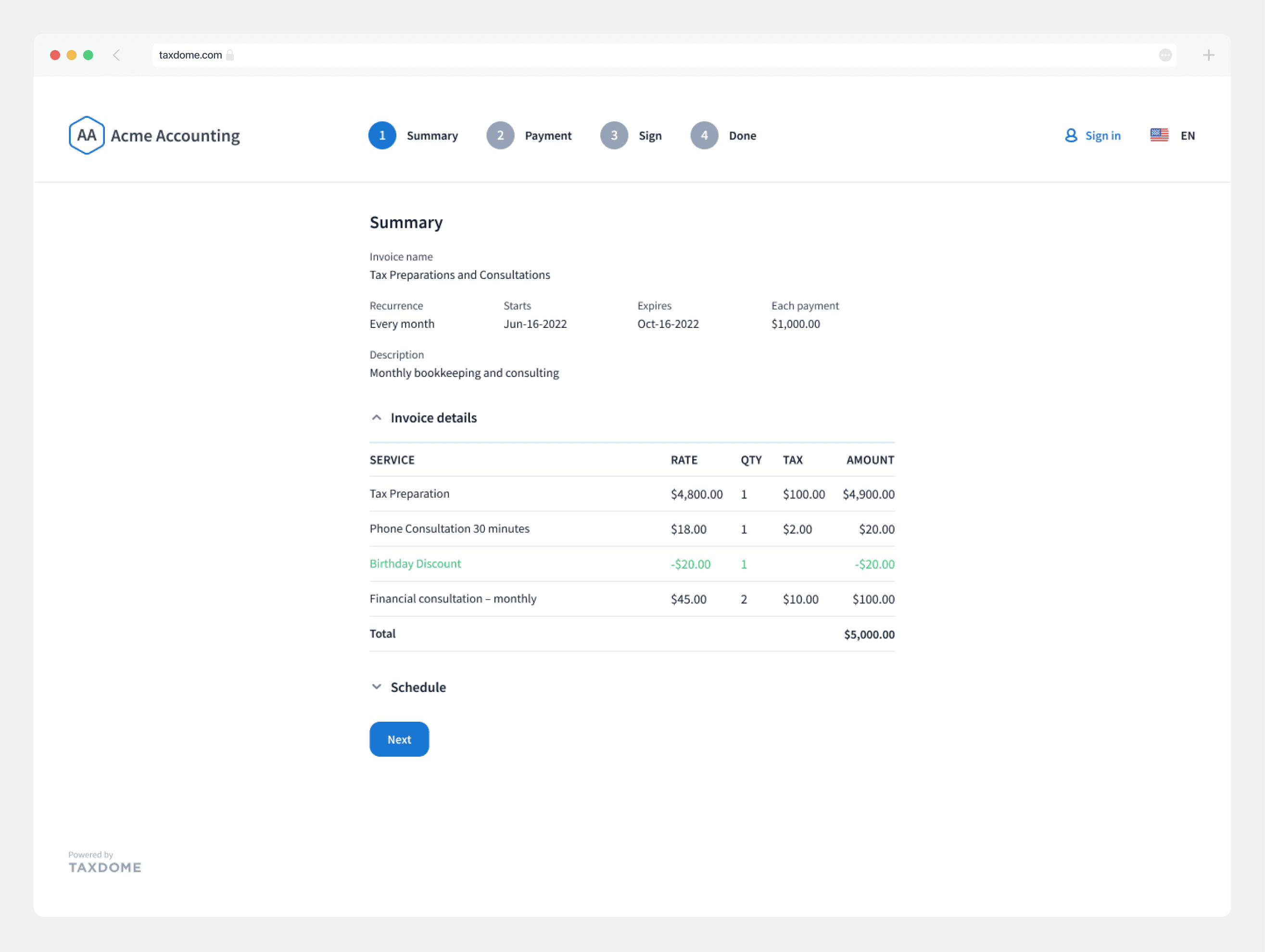
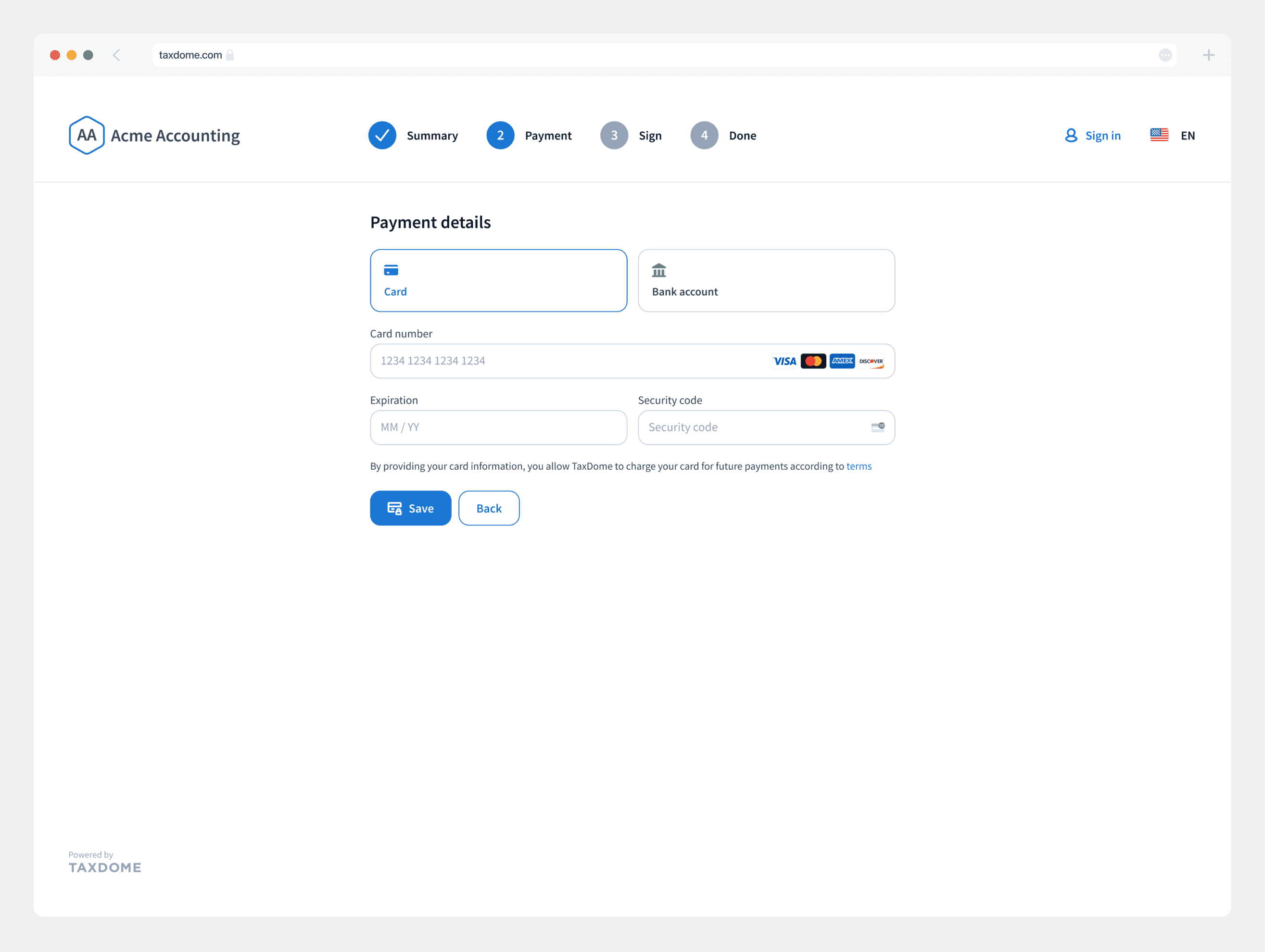
For firms, I designed reusable recurring-invoice templates so billing terms could be configured once and applied across large client lists. This was particularly important before tax season, when firms needed to create thousands of invoices within a short period. The more difficult decision concerned the client experience. The conventional approach required clients to log into the TaxDome portal before they could review and accept an invoice. Forgotten credentials regularly interrupted the journey, creating avoidable friction immediately before payment. Engineering raised legitimate concerns about the additional implementation complexity, while Product questioned whether the benefit justified the scope. I argued that protecting the simpler implementation would come at the expense of the actual outcome: completed payments and predictable revenue for firms. I pushed to keep login-free acceptance in the launch scope. Clients could review the amount, payment schedule and terms, complete any bank-required 3D Secure verification, and accept the recurring invoice without first recovering their TaxDome credentials. Working with a UX researcher, I tested the experience through 20 usability interviews. We evaluated comprehension of the payment schedule, navigation, negotiation needs and completion time, then ran further validation in the staging environment. During implementation, I introduced a pre-release design review so interaction, responsive and visual issues could be evaluated before production rather than ending design responsibility at handoff. After launch, 60.2% of recurring invoices were accepted without login, making the technically harder solution the dominant client path.
The feature reached its annual target in the first month.
We launched at the beginning of tax season – two to four weeks later than would have been ideal for helping firms configure templates and become familiar with the workflow. Despite the delayed timing, the feature processed $10M during its first month, reaching the original annual target immediately. By the end of the first year, recurring payments had reached nearly $40M—four times the initial goal. Adoption reached 12%, exceeding the 10% target. New customers also cited recurring invoices as one of the reasons they had switched from competing products.